
Compagnon
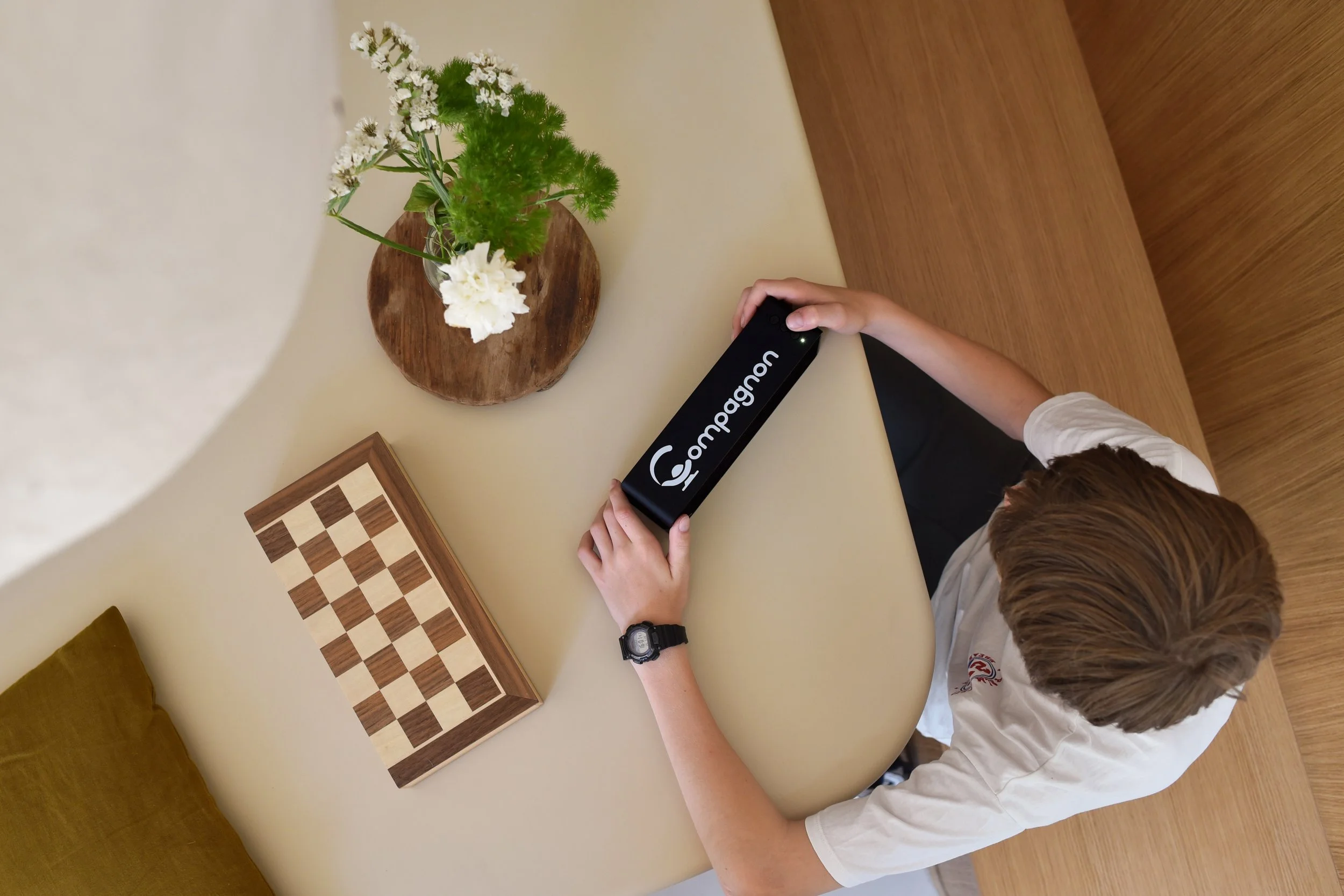
Une boîte noire sans écran répond, le soir venu, aux questions qu'un enfant n'ose plus poser à ses parents, contre un abonnement mensuel.
Les assistants vocaux pour enfants forment, depuis deux ans, une catégorie à part entière du marché du jouet éducatif, portée par une intuition que partage une génération de parents : l'écran effraie, la voix rassure. Compagnon, lancée à Noël dernier par Grégoire Véron, en est la version la plus aboutie, une boîte noire sans image ni notification qui répond, le soir venu, aux questions qu'un enfant n'ose plus poser directement à ses parents : pourquoi la mer est salée, ce qu'a vraiment fait Simone Veil, comment une fusée parvient à décoller.
Ce qui change, ce n'est pas la présence d'une voix dans la maison : les boîtes à histoires en distillent depuis une décennie, et un enfant de six ans sait très bien s'endormir au son d'un conte enregistré. Ce qui change, c'est que cette voix-là peut désormais être relancée, contredite, reprise trois jours plus tard sur un détail qu'elle avait retenu. Une écoute a cédé la place à une conversation, et cette conversation, techniquement, se souvient de lui mieux que bien des adultes de son entourage.
Le boîtier s'achète une fois, pour 99,90 euros ; le savoir, lui, se loue : une heure de découvertes renouvelée chaque mois, contre un abonnement possible dès 4,90 euros. La curiosité d'un enfant devient, littéralement, un forfait, au même titre qu'une plateforme de séries ou de musique. Une génération plus tard, la question posée à un enfant portera peut-être sur la formule choisie, autant que sur ce qu'il a appris.
Le marché, en tout cas, a déjà tranché : plus de 3000 exemplaires écoulés en dix jours, un boîtier introuvable dès les premières semaines de l'année, au grand dam des retardataires. Le contrôle parental intégré à l'application règle les horaires et filtre le contenu, un réglage nettement plus simple à calibrer que les habitudes de parole d'un enfant qui préfère, certains soirs, se confier à la boîte plutôt qu'à ses parents.
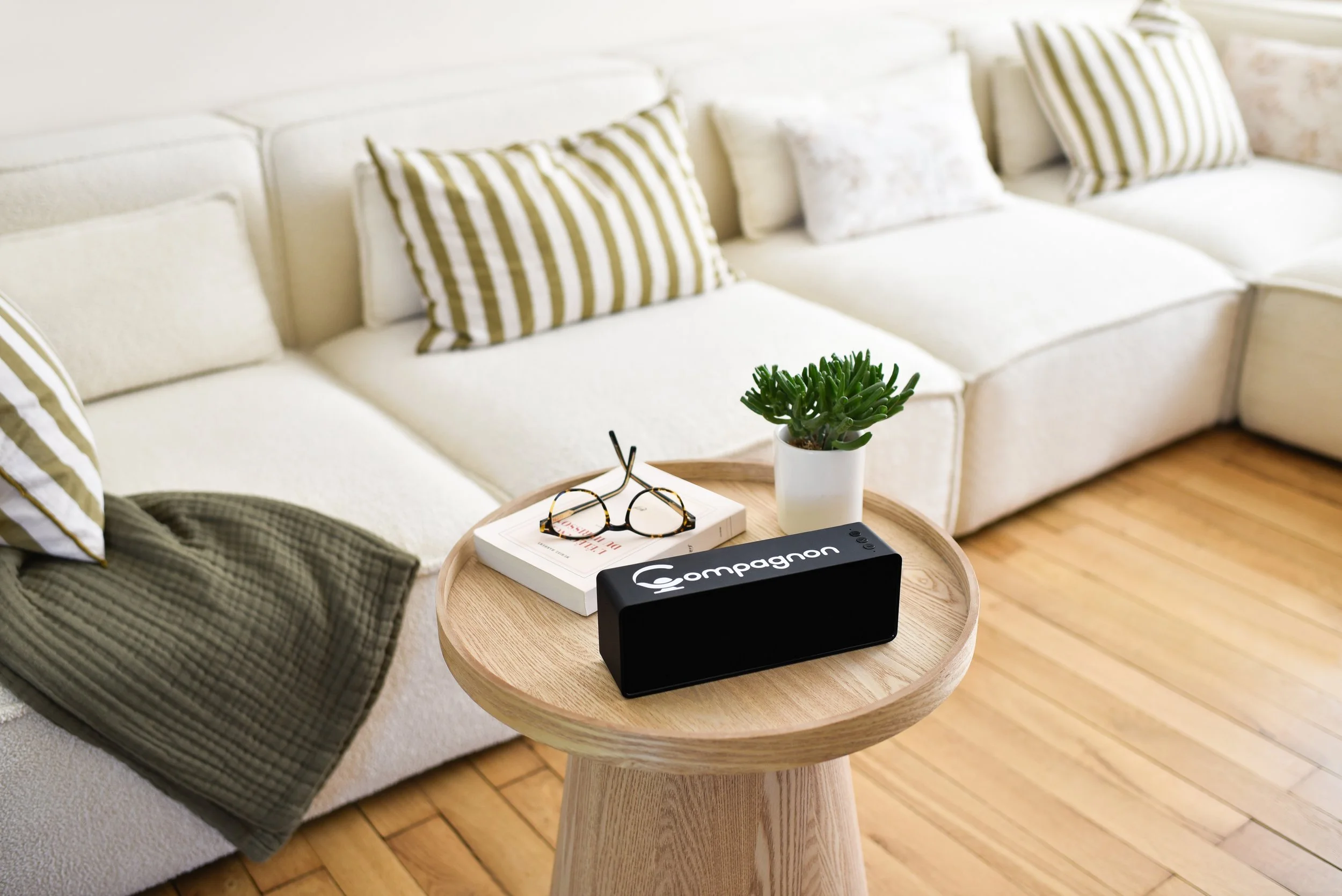
A black box with no screen answers, come evening, the questions a child no longer dares ask their parents, for the price of a monthly subscription.
For two years now, voice assistants for children have formed a category of their own within the educational toy market, borne along by an intuition shared by a whole generation of parents: the screen frightens, the voice reassures. Compagnon, launched last Christmas by Grégoire Véron, is its most accomplished form, a black box with neither image nor notification, answering, come evening, the questions a child no longer dares put directly to their parents: why the sea is salty, what Simone Veil really did, how a rocket manages to take off.
What has changed is not the presence of a voice in the house: storytelling boxes have been dispensing that for a decade, and a six-year-old knows perfectly well how to fall asleep to a recorded tale. What has changed is that this particular voice can now be questioned further, contradicted, brought back three days later to some detail it had remembered. Listening has given way to conversation, and that conversation, technically speaking, remembers the child better than a good many adults around him.
The unit itself is bought once, for 99.90 euros; the knowledge, by contrast, is rented: an hour of discoveries renewed each month, for a subscription starting at 4.90 euros. A child's curiosity becomes, quite literally, a plan, on the same terms as a streaming or music service. A generation from now, the question put to a child may concern the tier they were on, quite as much as what they learned.
The market, in any case, has already decided: more than 3,000 units sold in ten days, the box unobtainable within the first weeks of the year, to the great frustration of latecomers. Parental controls built into the app set the hours and filter the content, a setting considerably easier to calibrate than the speech habits of a child who prefers, some evenings, to confide in the box rather than in his parents.